Prodrome Science™ — Webinar Series
Introduction to Prodrome Science™
What if most chronic disease isn’t inevitable — just undetected until it’s too late to reverse? Dr. Dayan Goodenowe introduces the biochemical research platform behind plasmalogen discovery and explains why root-cause science changes everything about how we think about health and disease.
First — what is a prodrome?
In medicine, a prodrome is an early sign that a disease is on its way: the aching malaise a day before the flu arrives, the visual aura before a migraine. It comes before the illness announces itself. The word is Greek — prodromos, “running ahead.”
Dr. Goodenowe’s central idea extends that word into biochemistry. His position is that every disease has a biochemical prodrome — not a symptom you would notice, but a measurable shift in the body’s chemistry that begins years, sometimes decades, before a diagnosis is ever made. If that is right, the prodrome is the window in which disease is still most reversible — and the only way to find it is to measure it.
That claim is what the rest of this page is about.
Excerpt.
What this introduction covers
Dr. Goodenowe opens with a challenge to conventional medicine’s fundamental assumption: that disease is something that happens to you, rather than something that develops predictably from identifiable biochemical deficits. His position, built on over thirty years of research, is that disease is predictable — and that the tools to detect it early, and intervene at the root, now exist.
This introduction lays out the scientific foundation behind everything else on this site: what metabolomics is (the measurement of thousands of the body’s small molecules at once, to read its chemistry as a whole rather than one test at a time) and why it matters, what plasmalogens are and why their decline is central to so many conditions, and how Dr. Goodenowe’s 1999 mass-spectrometry platform (an instrument that identifies molecules by weighing them with extreme precision) made it possible — for the first time — to map the body’s full biochemical landscape at scale.
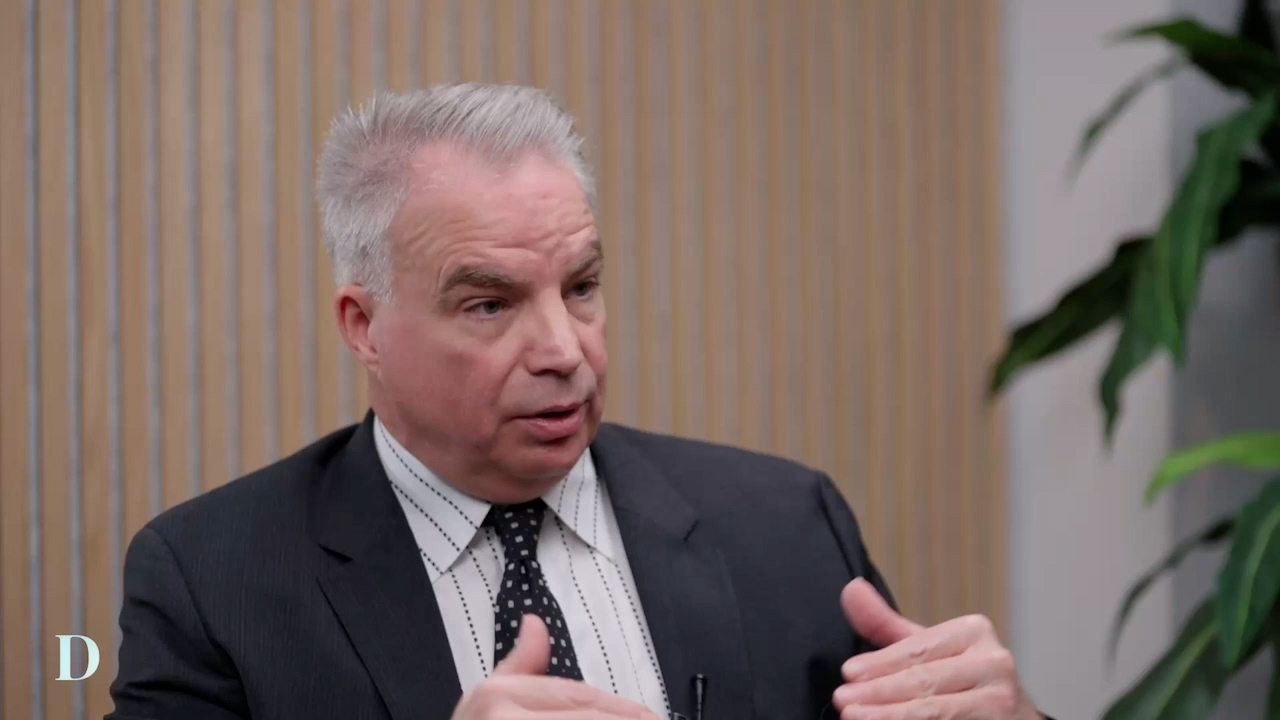
Dr. Dayan Goodenowe, PhD
Neuroscientist, biochemist, synthetic organic chemist, and inventor. PhD in medical sciences (psychiatry focus), University of Alberta, 1994. Founder and CEO of Prodrome Sciences. Author of Breaking Alzheimer’s. Over thirty years researching the biochemical mechanisms of disease. Learn more →
The core ideas
What Prodrome Science is built on
- Disease is predictable. Dr. Goodenowe’s foundational premise is that every disease — Alzheimer’s, Parkinson’s, MS, cancer — leaves a biochemical signature long before symptoms appear. “I believe that disease is predictable, and that the leading cause of death is ignorance — not of symptoms, but of the biochemical truth hiding underneath.” His research has been directed at reading that signature early enough to act on it.
- Metabolomics: reading the body’s full biochemistry. In 1999, Dr. Goodenowe invented and patented an ion cyclotron resonance mass-spectrometry platform that made it possible, for the first time, to comprehensively monitor thousands of molecules in the human body simultaneously. According to Dr. Goodenowe, he used this platform to analyze blood samples from tens of thousands of people across all ages, races, and countries — comparing the biochemistry of healthy individuals against those with disease.
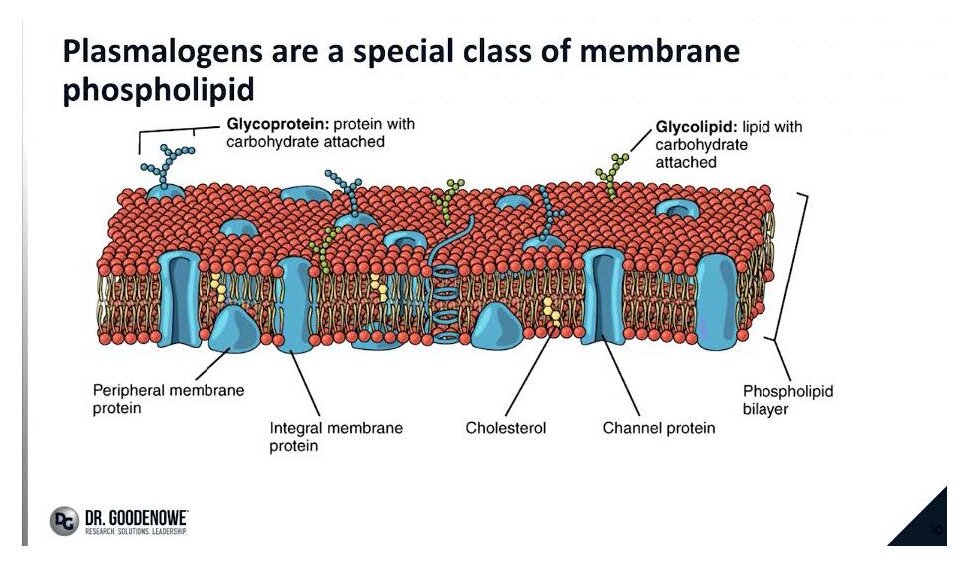
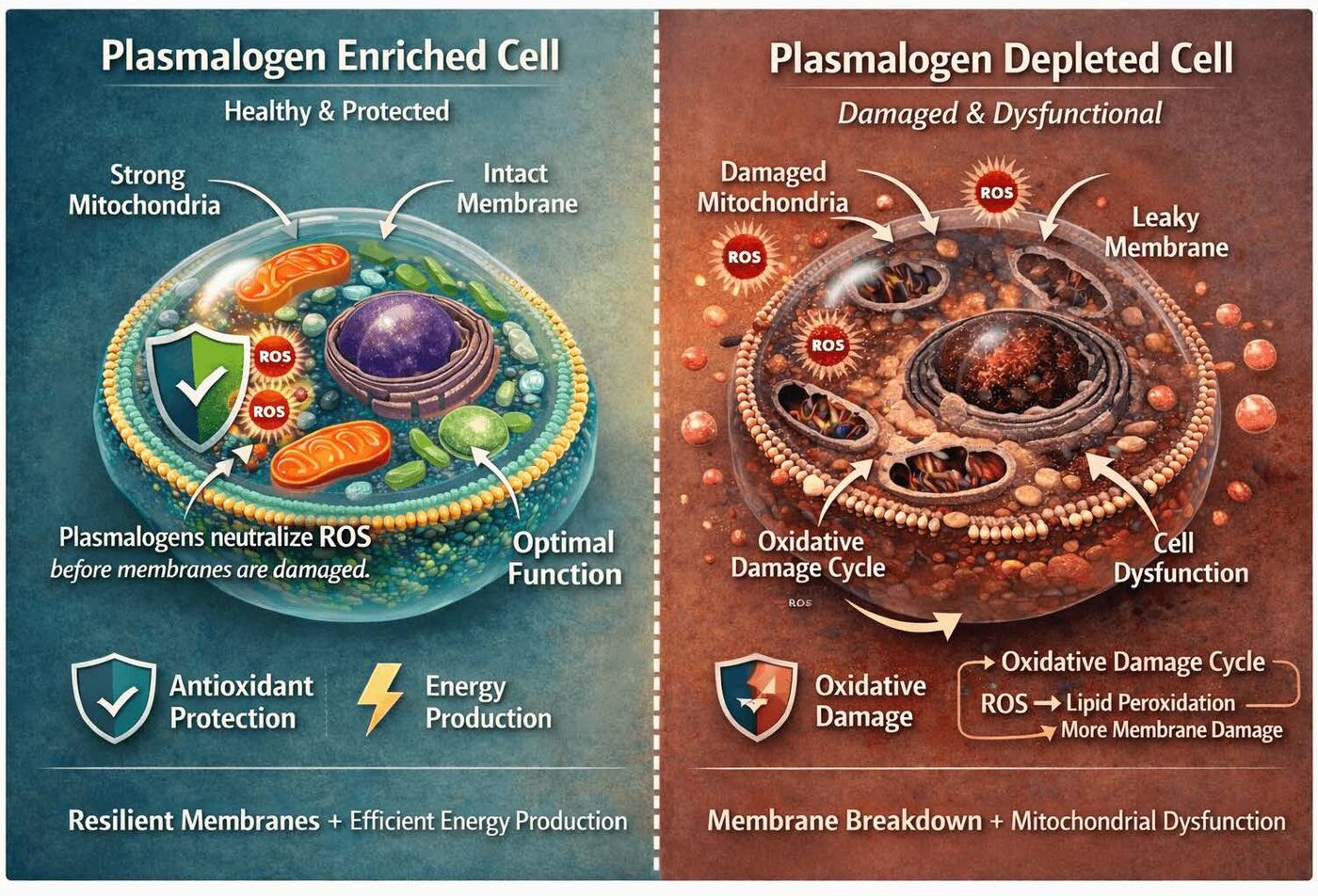
- The plasmalogen discovery. The most significant pattern that emerged from that data was a consistent deficiency in a class of lipids (the scientific word for fats and fat-like molecules — cholesterol, phospholipids and plasmalogens are all lipids) called plasmalogens — a special type of fat built into the membrane of nearly every cell, most heavily in the brain, heart and nerves, which keeps membranes flexible, lets nerve cells release their signals, and sacrifices itself to neutralize free radicals. They were molecules Dr. Goodenowe had never been taught about in his formal training. He reports that plasmalogen deficiency turned up as a consistent biochemical feature in Alzheimer’s disease, with findings first published in the Journal of Lipid Research in 2007 and since examined by research groups in Japan, Europe, and North America.
- Why you can’t get plasmalogens from food. According to Dr. Goodenowe, there is no viable dietary source that restores plasmalogen deficiencies — the molecules break down before the body can use them. This is why he developed targeted plasmalogen precursors: compounds the body can absorb and convert into the plasmalogens it needs. Two types — omega-nine (PlasmalogenN9™, for myelin and structural membranes) and omega-three (PlasmalogenN3™, for synaptic fluidity and brain function) — are the result of that synthesis work. Myelin is the fatty sheath wrapped around nerve fibers, like the insulation on a wire; it is what lets signals travel fast and cleanly, and it is largely built from plasmalogens. Synaptic fluidity is how easily the membrane at a synapse (the junction where one nerve cell passes its signal to the next) can bend, merge and reshape itself; a fluid membrane lets the cell release its messenger chemicals cleanly, while a stiff one can’t.
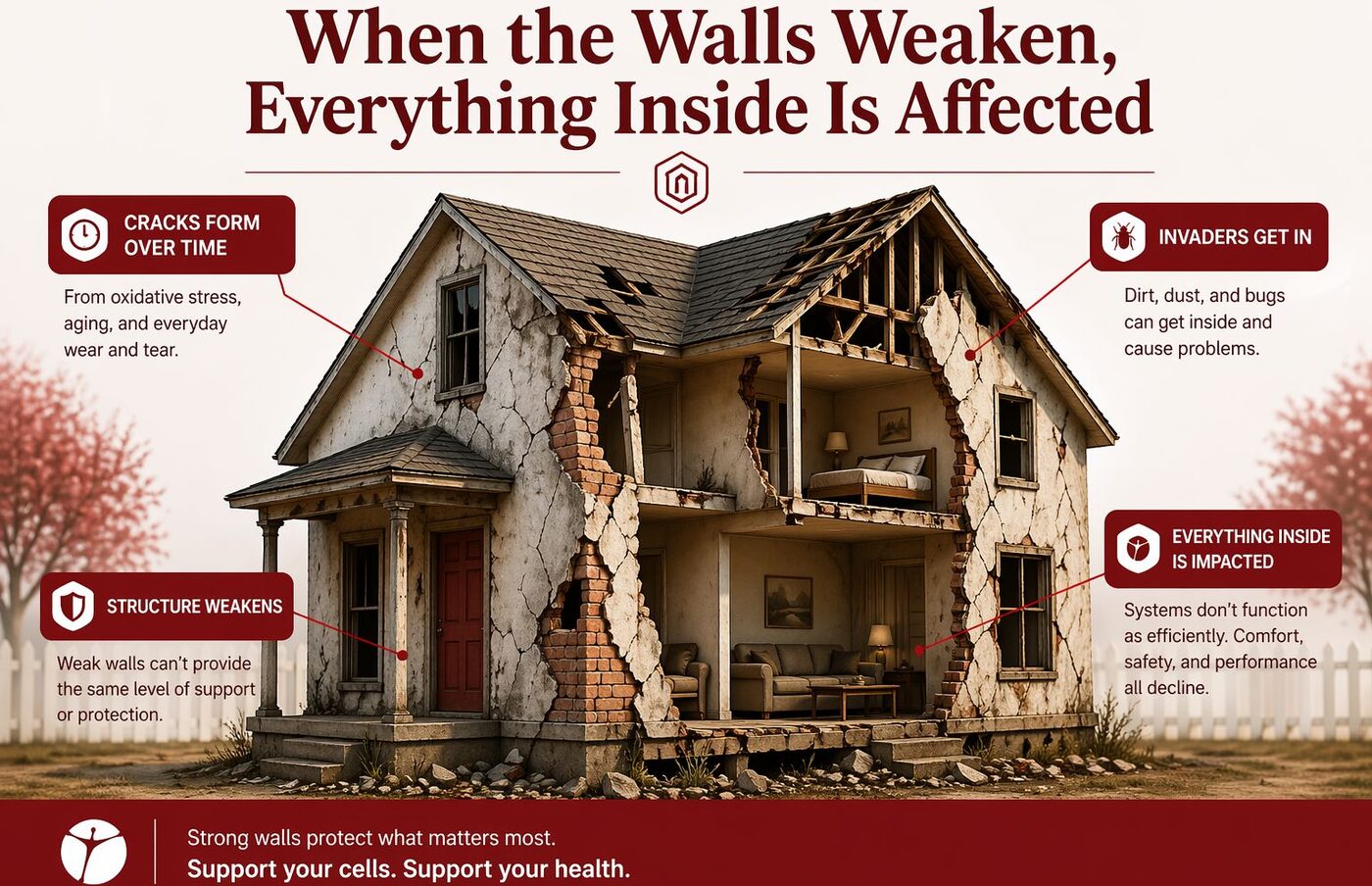
- The breadth of plasmalogen involvement. Dr. Goodenowe’s research has explored the role of plasmalogen deficiency across a wide range of conditions — including Alzheimer’s, Parkinson’s, multiple sclerosis, autism, ALS, schizophrenia, bipolar disorder, stroke, and numerous cancers. He describes plasmalogens as foundational to cellular membrane integrity — the soundness of the thin wall around every cell — across all thirty trillion cells of the body.
- Going beyond disease. Dr. Goodenowe describes his current focus as reaching past treating illness toward what he calls “strategic biochemical reserve capacity” — strengthening the body’s underlying chemistry so it can maintain function and resilience across a longer, healthier lifespan. In his view, the goal is not just to avoid disease but to give the body the raw materials to perform optimally as it ages.
What a plasmalogen does, in pictures
Plasmalogens are part of the membrane, the thin outer wall, of nearly every cell. These three pictures show where they sit and what changes when the supply runs low.
Why this matters for you
The Prodrome Science framework is not about treating symptoms after they appear. It is about measuring the biochemical state of the body before symptoms develop — and supplying what is deficient before the deficit compounds into something irreversible. Dr. Goodenowe’s position, as expressed across his research and webinars, is that most people arrive at a diagnosis only after years of decline that could have been detected and addressed much earlier.
The several other webinars on this site show what that framework looks like in specific disease contexts. This introduction is the foundation that connects them.
To explore Dr. Goodenowe’s full body of work, visit his website: DrGoodenowe.com ↗
Want to learn more about Dr. Goodenowe’s research or explore how this applies to you?
Get In Touch →► Learn more about Dr. Goodenowe